Bei mir geht der link vom Chrostian direkt aus dem Forum, auch ohne Account. Allerdings vom Handy mit Android.
VG
VG
 BikeAfrica7’359 Beiträge · seit 200609. Okt. 2026 ·
Gruß
Wolfgang
 travelNAMIBIAThemenstarter33,4k Beiträge · seit 200609. Okt. 2026 ·
BikeAfrica schrieb:
Bei mir kommt dann eine Meldung, dass der Inhalt entweder eine Zugriffsbeschränkung hat oder inzwischen gelöscht wurde.
Vielleicht lädt die Seite bei Dir noch, weil sie sich im Cache befindet.
Gruß
Wolfgang
Also bei mir geht's, ohne Anmeldung, mit leerem Cache usw. Hier also die Screenshots.
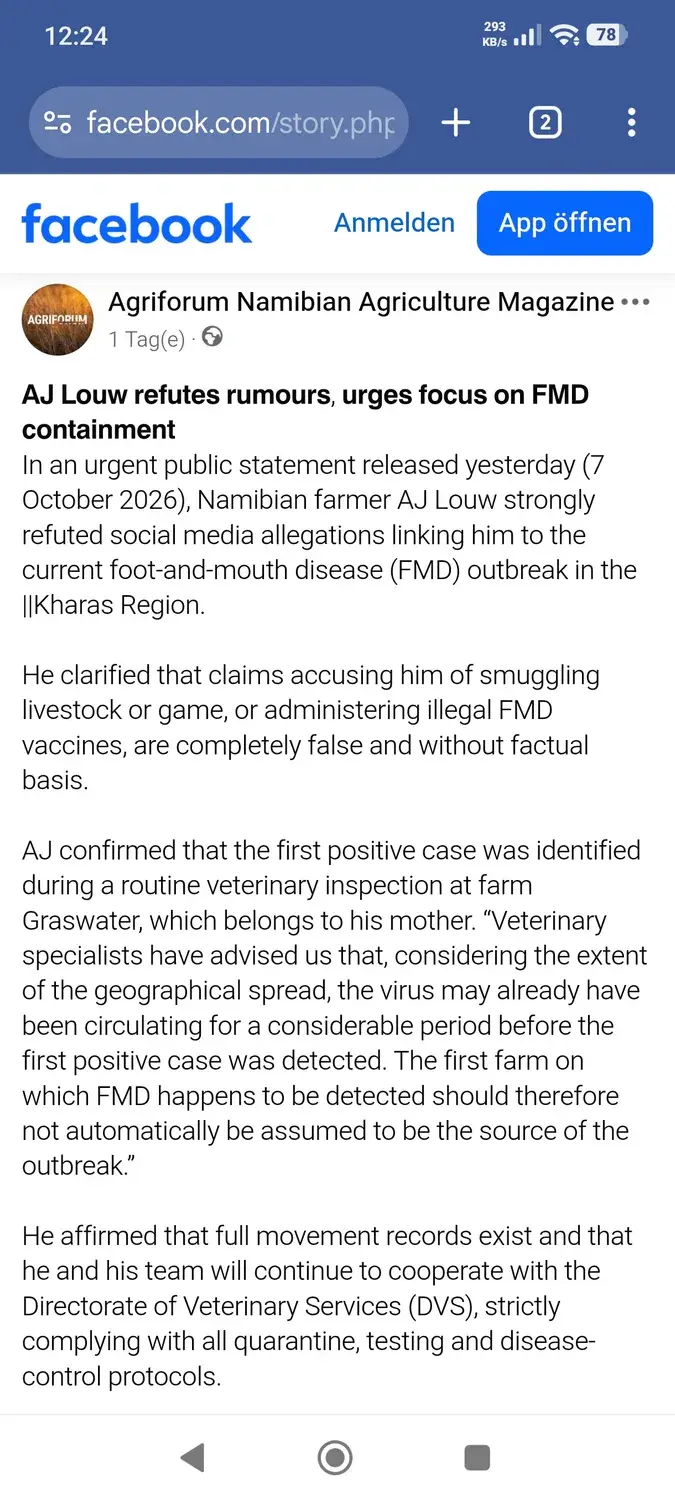
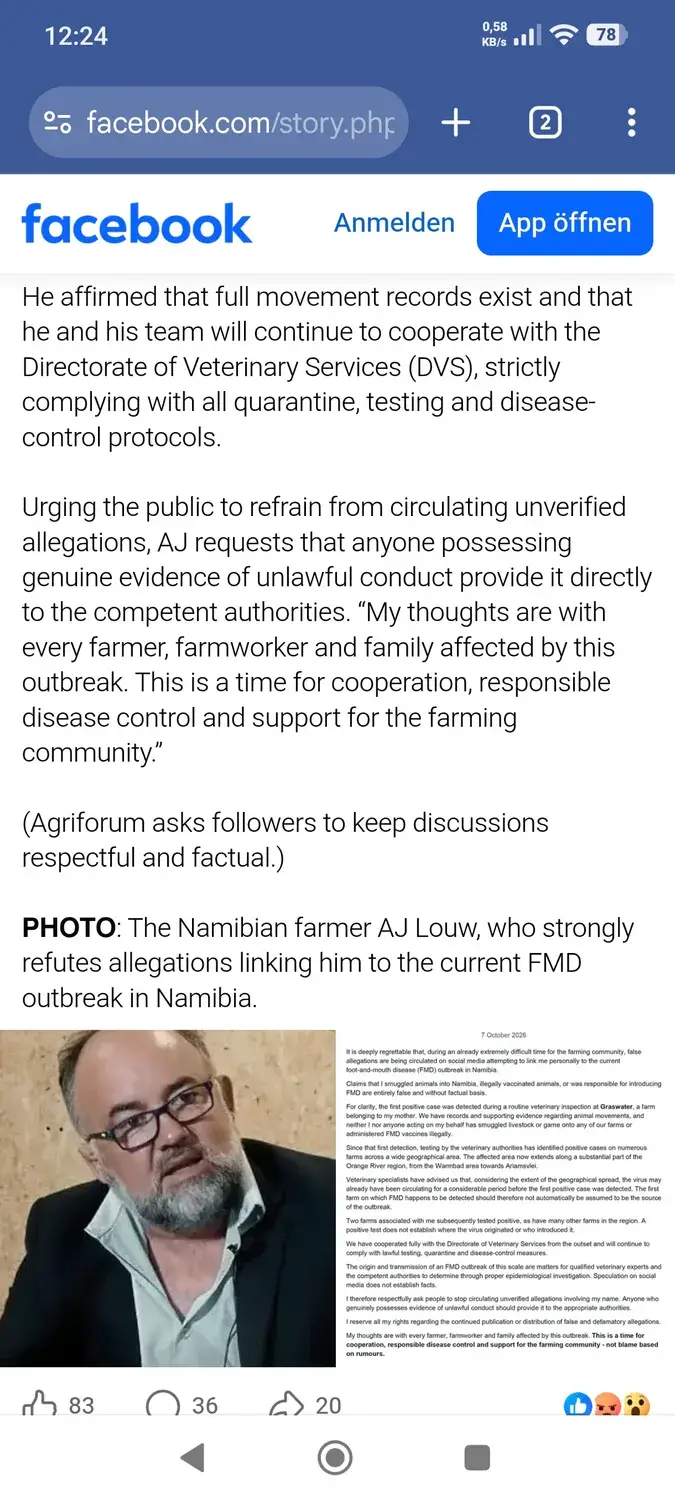
@ travelNAMIBIA
Na ja, dann war Namibia auch nie MKS-frei...
Jein 😉
In RSA sind die Quell- und Risikogebiete, der kommerzielle und informelle und kommunale Sektor (der sehr groß und schwer kontrollierbar ist) geographisch viel stärker durchmischt und (logistisch) kaum zu trennen, als das in Namibia der Fall und möglich ist. Einfach eine Linie quer durchs Land zu ziehen, ist in RSA nicht möglich.
Insofern erscheint mir die Etablierung und Aufrechterhaltung einer zusammenhängenden tatsächlich „MKS-freien“ Zone in Nambia praktikabler als in RSA.
Bin aber ein Laie und lerne gerne dazu
Grüße
travelNAMIBIAThemenstarter33,4k Beiträge · seit 200611. Okt. 2026 · 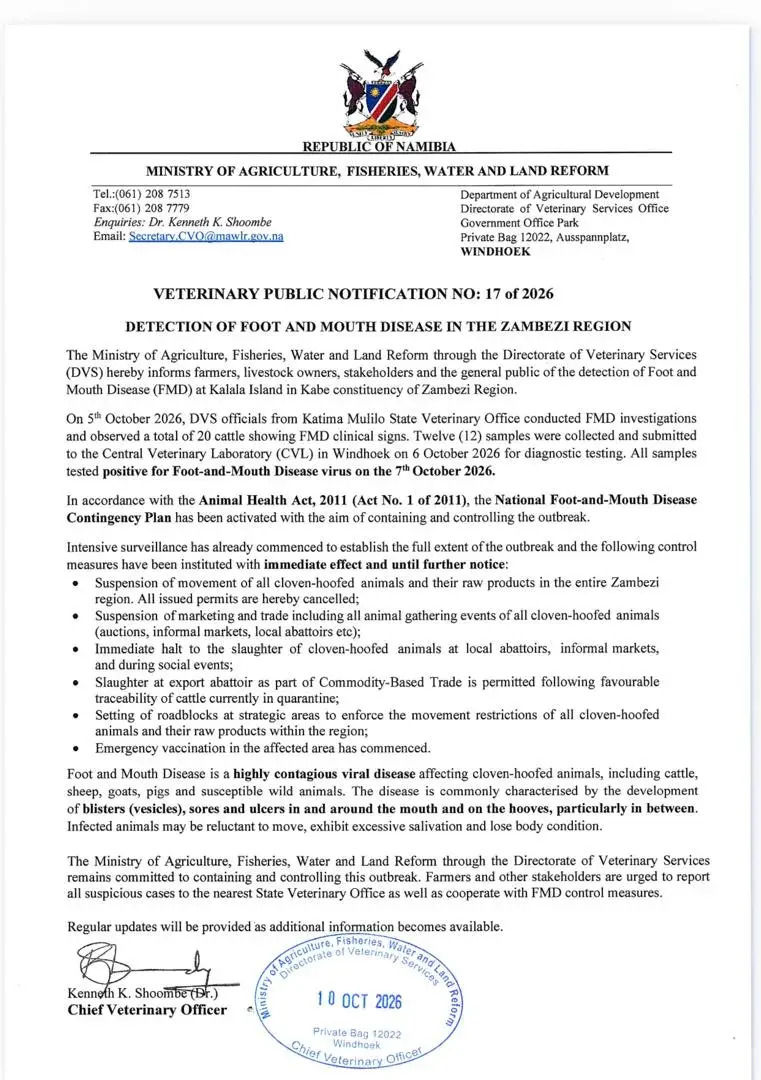 travelNAMIBIAThemenstarter33,4k Beiträge · seit 200613. Okt. 2026 ·
https://neweralive.na/fmd-response-operations-in-kharas-satisfactory
Wir waren im Khaudum und können folgende Beobachtungen bei Supermärkten auf dem Weg teilen:
Spar in Omaruru hat Butter (aktuell 57 NAD für 250 g, vor kurzem 62 NAD für 250 g (andere Marke)) aber keine Sahne. Joghurtauswahl ist ok. Fleischtheke ist sehr mau bestückt.
Superspar in Otjiwarongo hat weder Butter noch Sahne. Joghurtauswahl ist gross. Fleisch ist alles da, allerdings teils mit sehr kurzen Haltbarkeitsdaten (2-4 Tage).
Sirloin war länger haltbar (ca 3 Wochen bei 469 NAD/kg).
Vet-Zaun (natürlich) aktiv. Mitarbeiter sehr freundlich - Kühlschränke wurden kontrolliert, mehr nicht. Sowohl unterhalb Tsumkwe als auch vor der B8.
Liebe Grüsse
Guido
travelNAMIBIAThemenstarter33,4k Beiträge · seit 200618. Okt. 2026 · Seyko schrieb:Sirloin war länger haltbar (ca 3 Wochen bei 469 NAD/kg).
Das ist ja ein stolzer Preis... so das doppelte vom Normalpreis...
 pollux1’776 Beiträge · seit 200718. Okt. 2026 · travelNAMIBIAThemenstarter33,4k Beiträge · seit 200618. Okt. 2026 · travelNAMIBIAThemenstarter33,4k Beiträge · seit 200619. Okt. 2026 ·
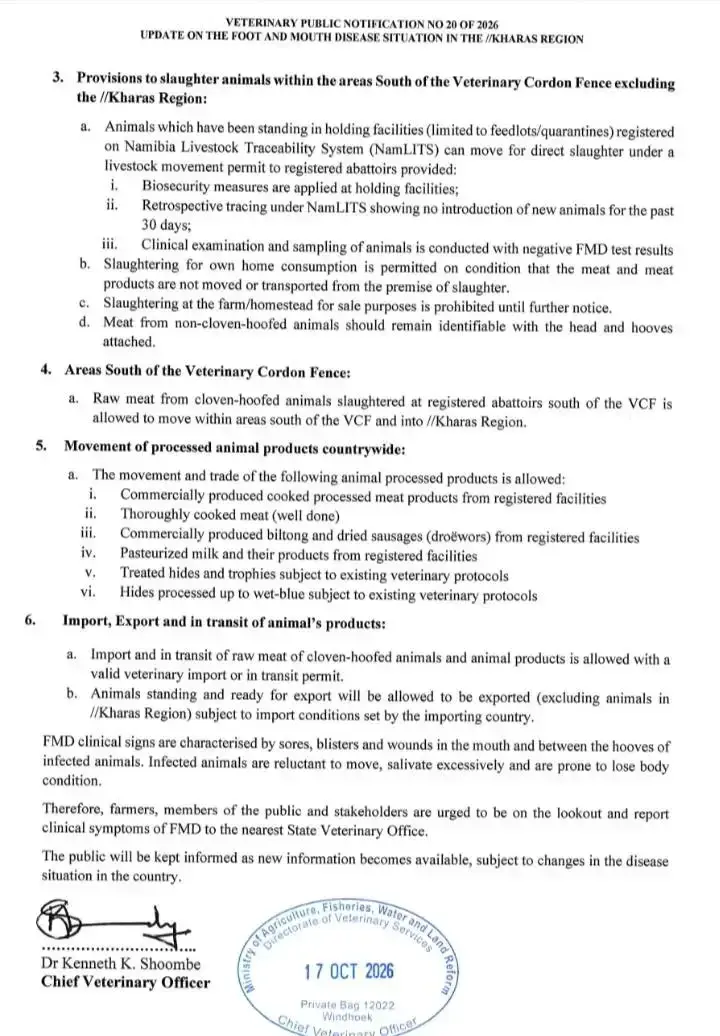
Füe Reisende somit nahezu keine Einschränkungen mehr, außer, dass die Region ||Kharas weiterhin wie die Gebiete nördlich des Zauns behandelt wird. Aus der Region Sambesi darf auch nichts raus.
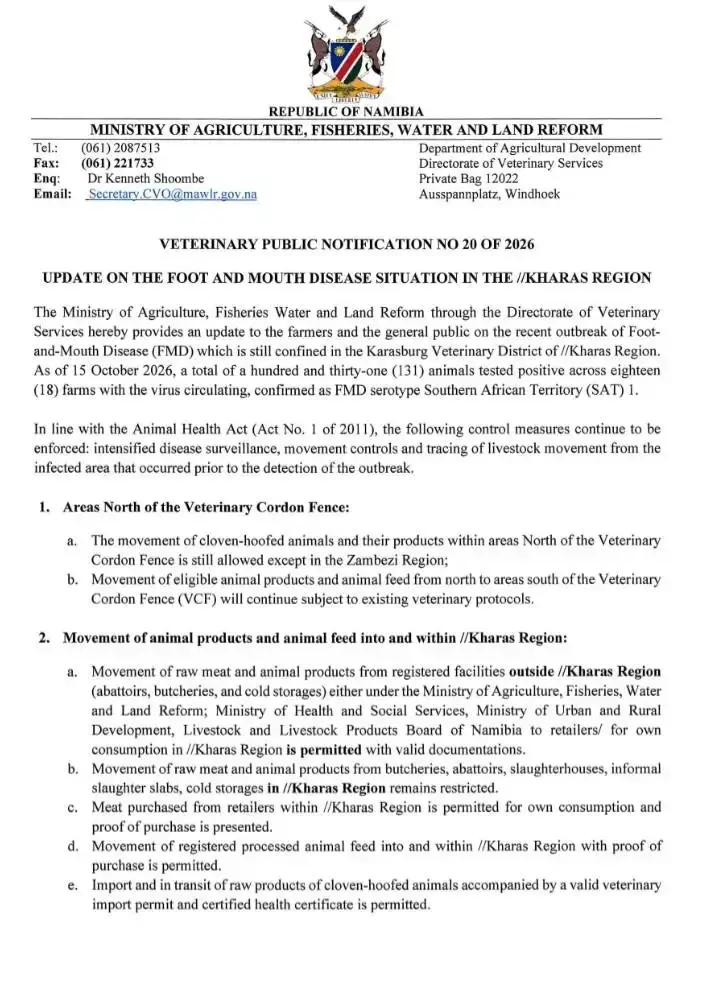
 dergnagflow2’605 Beiträge · seit 200720. Okt. 2026 ·
danke.
Lese ich das richtig, dass rohes Fleisch derzeit vom Süden noch nicht nach nördlich des Vet-Zaunes mitgenommen werden darf?
LG Wolfgang
travelNAMIBIAThemenstarter33,4k Beiträge · seit 200620. Okt. 2026 · dergnagflow schrieb:Hi,danke.
Lese ich das richtig, dass rohes Fleisch derzeit vom Süden noch nicht nach nördlich des Vet-Zaunes mitgenommen werden darf?
LG Wolfgang
So ist es, nur Produkte unter Punkt (5).
travelNAMIBIAThemenstarter33,4k Beiträge · seit 200621. Okt. 2026 · Muyunda further explained that in the //Kharas Region, where FMD was confirmed on 23 September, surveillance within a 50-kilometre radius of the index farm had been completed.
A total of 93 farms were inspected, of which 18 were confirmed to be infected, with 131 positive cases recorded.
The outbreak remains confined to the Karasburg State Veterinary District, with 18 stationary roadblocks and veterinary checkpoints operating across //Kharas and neighbouring regions to enforce movement restrictions.
“As of 21 October 2026, surveillance activities within a 50-kilometre radius of the index farm had been completed. A total of 93 farms were inspected, of which 18 were confirmed to be infected. The total number of positive cases remains at 131. The outbreak therefore remains confined to the Karasburg State Veterinary District. A total of 18 stationary roadblocks and veterinary checkpoints remain operational across the //Kharas, Hardap and Omaheke regions to enforce livestock movement controls in accordance with the prescribed restrictions,” he said.
Meanwhile, a compulsory vaccination campaign began on 17 October, with 19 teams deployed to vaccinate approximately 13,000 cattle.
By 21 October, 1,296 cattle across 25 farms had been vaccinated. The remaining cattle are scheduled to be vaccinated over the following two weeks during the first round of vaccination.
The campaign targets farms and establishments south of the B3 and C10 roads leading to Ai-Ais.
The ministry said vaccination, combined with livestock movement restrictions and biosecurity measures, is intended to reduce the risk of further transmission and protect animal health, farmers’ livelihoods and the livestock industry.
Livestock owners in designated areas have been urged to comply with compulsory vaccination directives issued under the Animal Health Act of 2011 and cooperate with veterinary teams. Failure to comply may constitute an offence.
“The ministry is therefore reminding all livestock owners and persons responsible for cloven-hoofed animals within the designated areas of their obligation to comply with the compulsory vaccination directive issued by the Chief Veterinary Officer. The directive was issued in terms of Section 19 of the Animal Health Act, Act No. 1 of 2011, read together with the applicable provisions of the Animal Health Regulations of 2018,” Muyunda said.
The ministry will also conduct FMD information sessions in //Kharas from 22 to 24 October to brief farmers and other stakeholders on control measures, livestock movement restrictions, biosecurity requirements and strategies for restoring livestock market access.
(Quelle:https://thebrief.com.na/2026/10/no-new-fmd-cases-outside-zambezis-designated-disease-zone/)
travelNAMIBIAThemenstarter33,4k Beiträge · seit 200623. Okt. 2026 · travelNAMIBIAThemenstarter33,4k Beiträge · seit 2006heute 11:00 ·